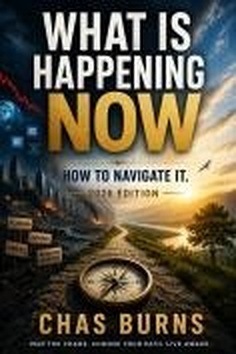
2026 · Baseline edition
What Is Happening Now?
The first Almanac establishes the map: what has already changed, what pressures are building, and what a person needs to understand to navigate the present.
Open the 2026 edition →This is not another book about A.I. It is about your life in a world being reshaped by technology, economics, politics, culture and social change: what is happening, what it could mean for you, and how to make better decisions without drowning in noise.
The Almanac is built for the person trying to work out how to live, choose and plan while the ground keeps moving. It translates large, messy changes into questions that matter in ordinary life.
Separate durable change from hype, panic, sales pitches and the story of the week.
Connect big trends to work, money, housing, education, relationships, health, freedom and opportunity.
Give the reader enough context to make better choices without pretending anyone can predict the future perfectly.
The A.I. in the title is part of the method. A.I. is used to help interrogate evidence, compare systems, surface contradictions and keep the map current. The destination is human understanding, not technology worship.
Each edition preserves the previous year's baseline and asks a harder question. The aim is to help readers orient themselves as the world changes, rather than discovering years later that the rules changed while nobody was looking.
The first Almanac establishes the map: what has already changed, what pressures are building, and what a person needs to understand to navigate the present.
Open the 2026 edition →The second edition makes the map harder to fool by widening the evidence beyond a mainly British and Western starting point, with China and East Asia as a recurring comparison.
Open the 2027 research page →The architecture is cumulative. The reader gets a clearer map each year: first the present, then different perspectives on it, then a genuinely world-conscious view.
Establish the baseline and map, predominantly Britain and the West in evidence base.
Turn the map outward, with China and East Asia becoming a recurring comparative lens.
Move towards a fully world-conscious Almanac examining major subjects across relevant systems and regions.
Artificial intelligence is one powerful force among many. The real subject is the changing world you have to live in: where technology meets bills, jobs, homes, relationships, health, information and the choices in front of you.
The Almanac deliberately uses A.I. in the research process to help examine large bodies of evidence, compare countries and systems, identify contradictions, test assumptions and follow fast-moving developments. Human editorial judgement decides what belongs, what remains uncertain and what matters to the reader.
Use A.I. to search across complex evidence and expose connections that are easy to miss when subjects are studied in isolation.
Claims are checked against primary sources, independent evidence and competing interpretations rather than accepted because a model produced them.
The final question is always practical: what does this change for a person trying to build a workable life?